Getting Closer (Post #204) 9/17/2010

I’m getting close to finishing the brake disc swap on the front of the Range Rover. I did have two disappointments though. With the brakes.

The brake caliper (ka-liper if you are German) on the right front had to be replaced. I attempted to rebuild them in the Restoration Part Uno. No matter how much effort I gave it I could not make the right front stop leaking. I’m guessing the bits were just too worn out. In any event, I replaced it with a new one. I’m pretty sure it came from Atlantic British.

So as I’m pulling the calipers off and the brake pads out, out falls one of the outer retainer rings for one of the pistons. I’m like, “WHAT THE HELL? Where did that come from?” Just then the brake pad in my hand separated. The asbestos bit came loose from the metal backing plate. So again I’m like, “WHAT THE HELL?”

I can’t tell you how disappointed I was. First that I didn’t keep my receipts/invoices. Second that a new part failed like that. Thirdly, I’m wondering if the word QUALITY is even in some people’s dictionaries.

So I take a look at the ring, yep, it was rusted all to hell. I then took it over to the bench grinder and polished off the rust the best I could. I got the Dremel out and put a mini wire wheel on it and got the inside bit rust-free as well. Then I needed to figure out a way to get it pressed back in.

I put the ring in place and using the metal backing plate and a large C and pressed it in. It is the dust seal for that caliper cylinder so I’m confident it will be okay. But seriously, what is going on? I’ve never seen a brake pad fail like that. I’ve heard of it, but never seen it.

With that little side project complete I had totally spent myself and gave up for the day. For the day I got the left front brake disc done and totally re-greased the bearings. I broke yet another tool on this part of the project.

I am not what people would call a “muscle man”. My entire life I’ve been cursed with exceptionally long arms and making those puppies muscular escaped me. I think I can wrench with the best of them but when it gets to stuck I rely on the levers and cheater pipes like anyone would. So I’m breaking the bolts loose on the brake disc and snap, I broke a socket. It’s a Craftsman and if they honor their warranty I’ll be bringing home a sack full of tools from this rebuild.

Sitting in my sister’s lap 1967 Guam, USA  

So far, a standard screwdriver, two punches, and a 16mm 1/2 inch drive socket have sacrificed themselves on the alter of the Range Rover gods. I’ve got to get them all together and take them down to Sears and get replacements. The socket was bought while we were on Guam to work on the Volkswagon type 2. So it’s been to Guam and back to Oklahoma. In its life it has circumnavigated the globe and is likely older than 90% of the people working at our Sears today. But I’m going to make them replace it.

So this weekend is finishing the right front disc brake and replacing the brake fluid reservoir and hopefully bleeding the brakes. Then its on to the viscous coupling! Happy, Happy, Joy, Joy.

Thanks for reading and Happy Rovering.

Off Weekend (Post #203) 9/13/2010

I didn’t work on the Classic this weekend. I wanted to…but I just didn’t have the time. I had time to talk about her. I showed my progress to two of my friends. My neighbors asked me if I was going to work on her this weekend. But I told them I could not.

Even though I did not climb underneath her and get greasy grimy I have worked out the sequence of events that will lead to the Classic being completed. There are two sets of tasks that will lead to the Classic being back on the road. There are the MUST DO tasks that present road blocks to driving her. And there are NEED TO DO tasks. These are less critical but necessary if I am to claim victory over this round of restoration projects.

This is the MUST DO list in the order these tasks must be done.

Brakes

  • Finish the front brake disc replacement
  • Replace the brake fluid reservoir
  • Bleed brakes
  • Replace the axle shaft seals (not ordered yet)
  • Pack bearings, drain and refill front differential

Viscous Coupling

  • Replace the viscous coupling

Tail gate

  • Paint and reassemble the tail gate
  • Apply badging

Repair floor

  • Make the replacement floor panels
  • Weld panels
  • Seal panels inside (painting) and outside (yet to be determined sealant)
  • Install sound deadening material

Bushings

  • I have the kit and have started to install it. I need to finish the install and get the Rover under control from weaving and

Transmission

  • Take Range Rover to transmission shop and have them assess the damage and repair

Tires

  • Replace tires all the way around with a new set of Bridgestone Dueler AT Revo II’s. Which I am pleased to report they still make. My best friend Retired Poster Marine purchased set not a month ago.

Windshield

  • I have to have the windshield removed and seal fixed. The water coming in is mostly from the top and not through the bottom of the floor. I’m hoping it can be sealed and that we don’t find any rust on the metal under the seal. This should eliminate or seriously limit the water that is causing the rust issue on my floor boards.

I also have a list of repairs that I should do while the Classic is in its various states of disassembly. Several of these repairs are not at all necessary but merely cosmetic. Some are luxuries that if I want Mrs. OkieRover to ride with me, I’ll have to fix This is the NEED TO DO list starting with…

Air Conditioning

  • I need to completely recondition the AC (again). My daughter ran the AC without coolant from an undetermined leak and thusly the compressor is dead. I need a new compressor, dryer, and valve (which I have already purchased) and it all needs to be installed. I think I’ll have a professional test the system and charge it after I get everything replaced.

Radio

  • While I have the carpets and head liner out I should take the opportunity to rewire the sound system. I haven’t determined what is broken with the system yet. I’m pretty sure the amp is not working. I’m also pretty sure that the subwoofer is not working. I have two bad speakers in the back as well.

Headliner

  • The headliner is showing signs of sagging again. My last repair is finally starting to show signs of needing a redo. I could also take the opportunity if I had the money to add some sound deadening material to the roof while the headliner is out.

Sunroof

  • The sunroof mysterious stopped working. It will start to retract, but stops. I’m not sure what it is but while I have the headliner out I should probably investigate that problem and repair it if possible. I love the sunroof. I love driving around in the Fall with it open. But I don’t love it so much that I’ll spend a ton of money to fix it.

Window tinting

  • I’d like to do this as well. I understand it will be around 200$(US) maybe as much as 300$(US). It gets hot in the Range Rover in Oklahoma and since I’ve converted the air conditioning to R134a it hasn’t cooled at the level it did before. Tinting the windows looks bad ass on a white car too.

Door locks

  • This system is completely failed. The fob no longer locks the doors and the bouncing lock problem is back. Completely pulling out the old and replacing with another system will be expensive. I have sourced some replacement actuators that are reasonably priced. Sadly I lost the resource and will have to source them AGAIN. There was a write up on a blog that described how they wired around the relays that seem to fail but alas I’ll have to find that again as well as I failed to bookmark it the last time I read it.

Power Steering Hoses

  • I have replace these hoses. The leaking, although a rust inhibitor is annoy as it has buggered up my driveway with a nasty oil spot. I will remove them and take them to a shop in OKC that makes custom hoses. I can get stainless steel braided hoses made for the same cost as those in the supply magazines.


New springs and shocks

  • After I get the transmission and the tires paid off I will buy all new shocks and tires. I can get a bit of lift from a stiffer set of springs and the shocks are in their seventh (7th) year and should be replaced. I don’t think they’ve failed out right but I think they are on the way.

Axle Halves and Hub Rebuild (Post #201) 9/7/2010

Busy, busy weekend.
Lets start by saying this was a three day weekend. Meaning in America we had a federal holiday that gave us an extra day off. Labor Day. With that in mind labor was indeed what I did this weekend.

This weekend also kicked off the 2010 College Football season. For those of you in lands other than America this is like the World Cup opening weekend and your team is favored to win the whole thing. Favored right up until the team’s first snap of the ball, then you realize your team doesn’t have a chance, but you are excited anyway.

This year found us actually attending the game. A friend of my wife gave us his seats and we got to watch a football game in person. We normally watch from home as nearly every game the University of Oklahoma plays in, is televised. We had great seats, six rows up from the field on the 50 yard line. You can’t ask for better seats. (we won, defeating the Utah State University)

So, as you can imagine Saturday was all football and a little bit of house cleaning. Sunday was scheduled to be my designated work on mom’s house day. But with Mrs. OkieRover on call at the hospital I swapped it to work on the Range Rover day.

I skipped church and dragged myself out of bed at 0800. I broke out my Rovers North Coveted Mug (1 each), made some tea (with honey) and went out to the garage to tackle the hubs and axle half shafts.

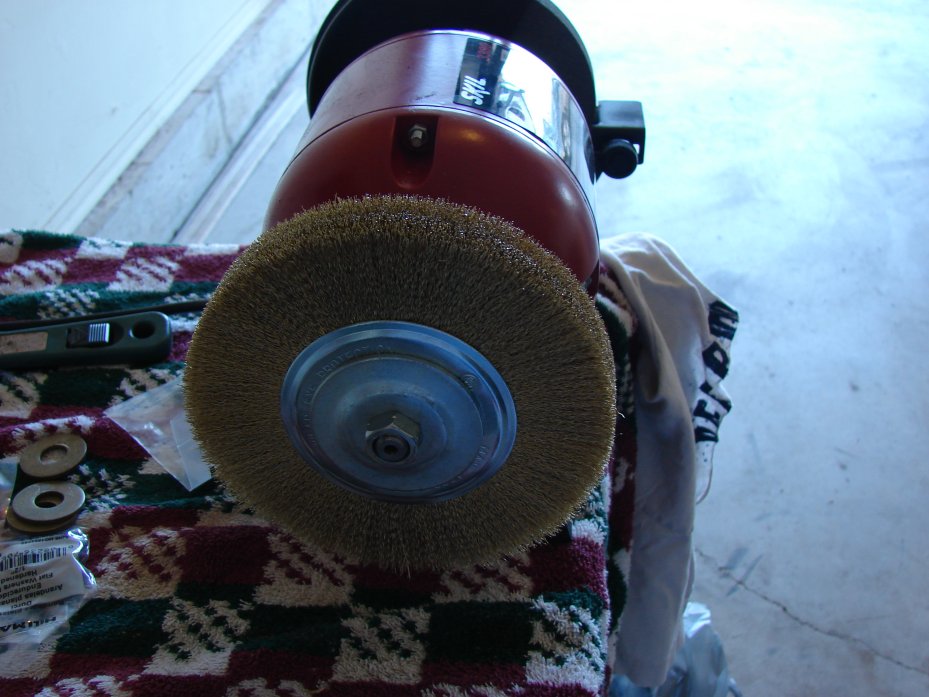
My first task was to put the wire wheels on my new bench grinder. I wanted to buy the big 8 inch model but settled for the 6 inch because it’s not something I’ll use EVERY weekend. I mounted the two fine wire wheels on the shaft. I had purchased some washers and shafts but as it turned out, they were not necessary. I’ll keep them around for the course wire wheel I bought with the grinder.
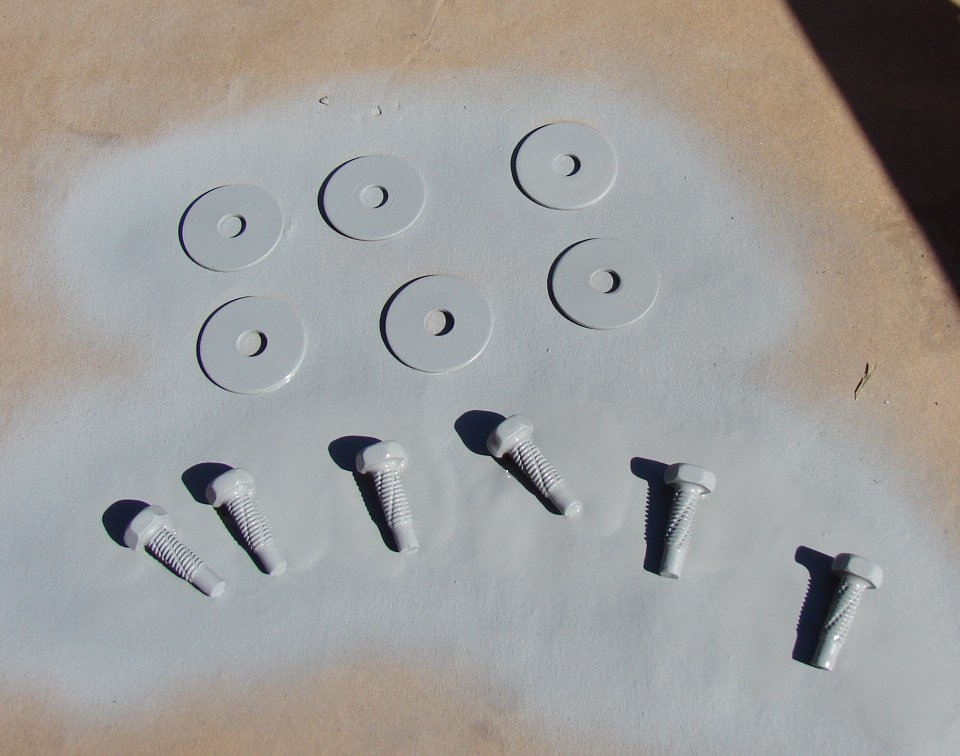
The first part of the job was to get the splash shields mounted. The bolts and washers were corroded from years of use. I polished them with the wire wheel and then gave them a nice coat of Rustoleum primer.

I got the splash guards finished and then looked at the hubs. As I mentioned in a post some time ago I have a set of new bearings for the axle. I was a little wary about installing the new races but with some reassurance from JagGuy that it was easy I went about getting the new races installed.

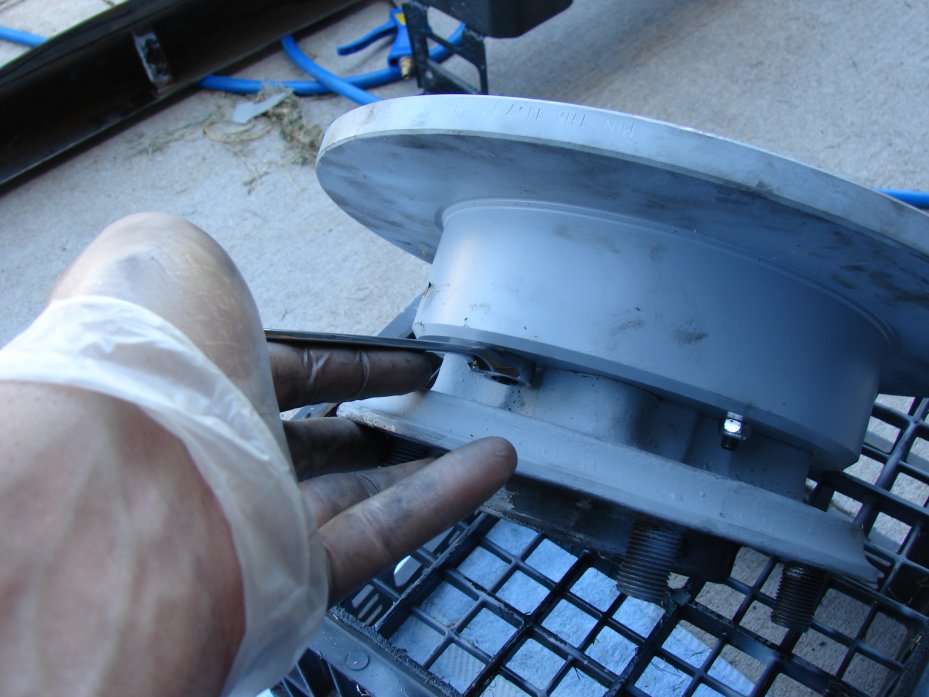
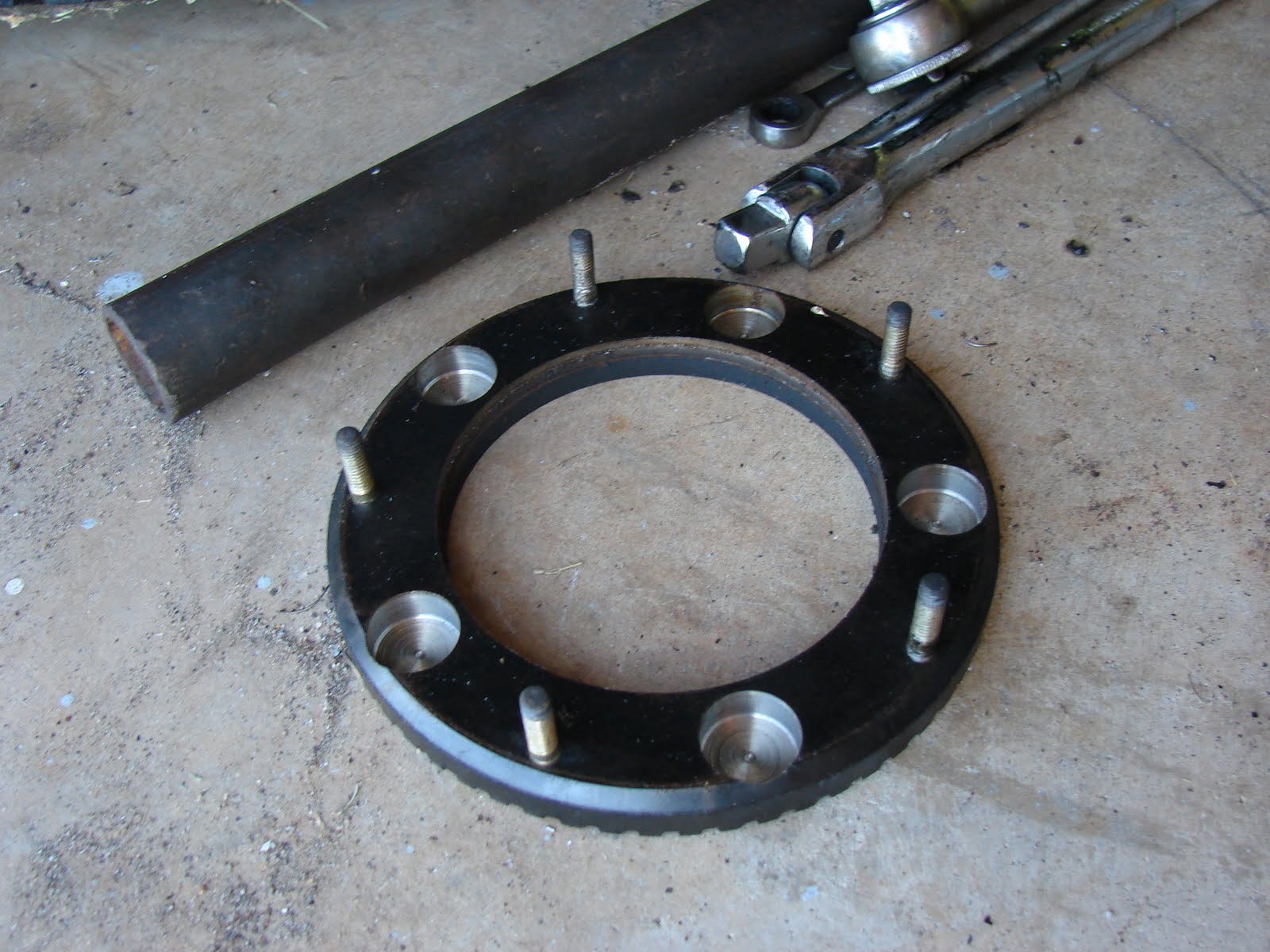
I reassembled the hubs. This is mounting the brake disc to the hub and bolting them together. Then you need to install the ABS sensor ring. I prepurchased the nyloc crown locking nuts just for this occasion. You slide the ABS ring into the holes and punt the nuts and tighten. Not hard by any stretch. The next photo has me positioning the ring. You cannot do this without tightening the bolts you see in the picture as not run down to tight.

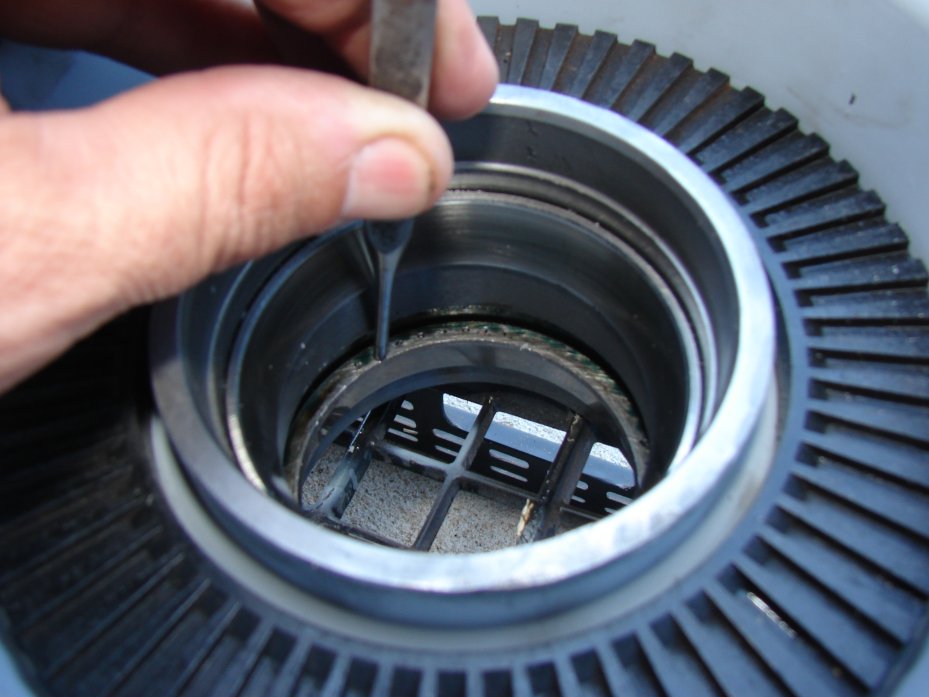
Getting the old race out requires using a punch and a hammer. The theory goes that you tap on alternate sides until the race falls out. As you may or may not know the race fits VERY tightly in the hub. I’m sure in an ideal world you would have these pressed out and the new ones pressed back in by a machine shop or the like.

My garage is not the ideal world. So I set about with the punch and a hammer to knocking them out. There are two races, an inner and an outer, per hub. As JagGuy said, its no big deal getting them out. Avoid hitting your hand with the hammer is the only advice I can offer.

You put the new races in just like you take the old ones out. The advice I offer here is striking the race about every 45 degrees as you move around the ring, slowly inching the race into place. Something to note here is having quality tools. Cheap punches will fail you on this project. Think about hitting a wooden stake with a hammer. The softer the wood the quicker the top of the stake with flare out and then splinter.

The same thing happens with cheap punches. I had the two punches my dad had in his tool chest. They are both Craftsman by Sears. Craftsman tools are replaced no questions asked. They will both be warranty replacements on my next trip to Sears along with a screw driver that no longer has a tip. The first punch was terrible and quit me about half way through the second race install. The second punch managed to finish the first hub and the second. The tool casualties are starting to mount.

The only real tip to race installation is making sure they are full seated. When you are fully seated you get a different feel from the hammer striking the punch. That is the first clue you are seated the second is by visual inspection.

So with the races installed I packed the bearing with grease and inserted it into the hub. The back side is held in place with a ring. I mounted mine with a plastic hammer very carefully. The bearings fit VERY tightly on the shaft. I know they are the same part number but in both cases only one of the two bearings fit on the inner portion of the hub shaft.

I packed the bearing spaces with more grease. I then slipped the bearing and hub into place. This took some doing but I finally got them on. You then mount the bearing washer in place and put one of the hub nuts on and tighten. I used a large set of channel lock pliers. These don’t have to be screwed down real tight. Its best you put them back the way you found them.

You then put the crush washer on and bend a flap over to hold the inner hub nut in place. You then put on the outer hub nut and tighten. I remember the tightness from the tear down. I did my best to match that.
I then packed the hub with wheel axle grease. I can comfortably say it would not take any more grease when I was done.

I applied the gasket material. There is a paper gasket included in the kit. I did not install it. Instead I just used the gray gasket material. This will probably come back to bite me in the ass. I wiped the surface as clean as I could and applied the gasket goo.

I wiped away the excess and made sure it was uniform in its application.

I installed the brake caliper and bolted it down good and tight. I then attached the brake line. I inserted the new brake shoes and got them clipped in. I will have to find a brake wear sensor plug or wire them directly. I’m not sure when the plug went missing but I remember seeing an extra somewhere.

I then slid in the half shaft. This takes a little bit of finesse but is no big deal. Get them seated as close as you can. Then take the bolts and using the same pattern you would to put on lug nuts alternate around the axle tightening until you get to the “I’m gonna need some help” point. Using a 1/2 inch break over bar, which should be standard kit in your Land Rover, use the break over bar to brace against as you tighten the bolts down.

If you remember you needed the cheater pipe to get the damn bolts off. So you can probably guess you’ll need something to get them back on there just as tight. I was running out of steam at this point and our friends were expecting us so I called it quits for the day with only the driver’s side hub bolts left to tighten and the brake caliper left to be installed.

I’m only a few more steps from having the Range Rover mobile again. On my next work day I will finish the axle. I will then install the new brake reservoir. While I have the system nearly dry I will install the new brake discs on the front axle. I understand this is not the task the rear turned out to be.

With the brake system restored, I will then remove the dead viscous coupling. I will then pray that the one I sourced used is good and install it. If everything goes well here I am on to painting the rear door by the end of the month of September. I will have to put all the electrics back together under the passenger seat. At that point I can drive the Range Rover over to the Evil German Dude’s shop and have him assist me in welding in the new floor pieces.

After those are in I need to seal them from the bottom and from the inside just like the driver’s side. I will then make a call on the sound deadening material, buy it and get it installed.

While the dash is out I’m going to remove the malfunctioning piston that prevents me from dropping the transaxle into low. I can then reassemble the carpet and interior.

I have a camping trip scheduled for the third week of October and I hope to drive the Range Rover down there.

It may be an ambitious and optimistic goal much like my hopes for a National Championship in football for my alma mater, but it’s a goal for now.

Thanks for reading, Go Sooners and Happy Rovering.

Shhhh! (Post #199) 9/1/2010

What to do? What to do?
We are at one of those awesome spots in a project where you have a decision branch. Do we go direction A or direction B. Each direction has pros and cons. Neither direction is “the right way” as opposed to the other direction which could also be “the right way”. It is truly subjective.

The dilemma is just this, what do I line the floor boards with after I have repaired the rust holes and get the floor painted?

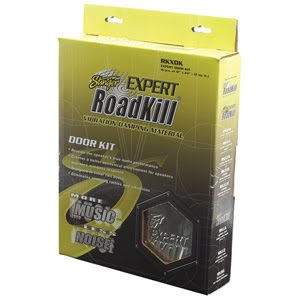
I have done a little research. My friends here at work say the auto audio places have the stuff you want. I looked into Dynamat (endorsed by none other than Chip Foose) and Stinger Road Kill endorsed by Carl at AutoImage USA in Norman Oklahoma. Carl was very helpful and showed me the product and said it was superior to Dynamat due to its greater thickness and cheaper price. One of my mates here at work also said, “there were cheaper and better products out there.” This must be it. Unfortunately for Carl his price for the Stinger Road Kill kits were about double that of the sellers on Google Shopping. Carl did say I could get my entire under body sealed for 300$(US). This gave me an idea that perhaps I might give him a shot at the undercoating once the repairs were done. This is going to be a nasty dirty job and I don’t relish it especially lying on my back in the garage.

The first decision has already been made. I will not put it back the same way it came out in regards to the carpet the sound pads underneath. As you read in an earlier blog post the factory sound pad is a giant water retaining sponge. You already know the Range Rover and apparently every other Land Rover automobile is a basically a petri dish for rust. Add water and watch the rust grow! In my opinion I think this is the biggest disappointment in Land Rover history. Purpose built vehicles that have absolutely not been protected from rust.

I just finished reading a post on the Lucky 8 blog that describes the restoration of a 1997 Defender. If you flip through the 166 photos you will see rust on that vehicle that is totally inexcusable. This was a New York vehicle that was about to succumb to the rust monster. The D90 was rescued from Billy Joel by an owner who intended, as the post goes on to say, to become his beach cruiser at his North Carolina residence.

Look at that transformation! That is a totally new vehicle. Everything that could rust has been refurbished or replaced or coated to never be a problem again. WHY WASN’T THIS DONE AT THE FACTORY? It boggles the mind.

I wish I had the resources to do this to my beloved 1993 Range Rover LWB. A total body off restoration. How awesome would that be? It would only cost 15 or 20 thousand, why not!? Well, man cannot live with out dreams, so I will continue to dream about that.

So back to the decision…
Course A – might be something like this.
Install a Dynamat or Stinger Road Kill like product to the floor pans of the Range Rover. This would be to protect them from water and further rust. On top one might also add a new carpet pad from one of these manufacturers.

Course B – might be something like this.
Install a Dynamat or Stinger Road Kill like product to the floor pans of the Range Rover. Dry the existing OEM carpet pad and reinstall.

Course A would be more expensive but all new products would be water resistant or water proof thusly eliminating the rust problem.

Course B would be a bit cheaper. The floor and windshield in both scenarios will be sealed to prevent the water that was the problem in the first place. So using the old pad would not present EXACTLY the same problems as before.

Course A is perhaps the best choice. If only for this one reason, if the OEM pad were to get wet again, it would be setting there WET, breeding rust. That pad took forever to dry out (if if ever did) and is in my mind inferior. The trick would be to replace it with a superior product that didn’t break the bank.


So the real decision tree is Dynamat or Stinger Road Kill or some other unnamed product. The prices are comparable on Google Shopping. Finally we come to the final and last real question,
Which product do I use?

Plato would be proud of us if he were here to jury this thought experiment. We eliminated the questions that gave us undesirable results and boiled it down (to mix a metaphor) to a win-win scenario. The guys restoring the D90 used Dynamat. Auto Image USA uses Stinger Road Kill. I think either will work exceedingly well.

Have any of you ever used any of these products? drop me a line and let me know what you think.

Thanks for reading and Happy Rovering.

The Good, The Bad, and The Ugly (Post #193) 8/12/2010

[Queue the theme song]
The Good, I started on the rear brakes last night.
The Bad, I can’t finish the project.
The Ugly, I found a broken axle half shaft.

As you can see in this picture the rear brakes on the Range Rover are looking pretty knackered. I love that word “knackered”. In this context I’m using the British and Irish slang form. But it works as well for me on the British/Australasian level too. For when I saw the broken half shaft I translated it into American English and that was one of the words I used do describe my disappointment. RovErica, while driving her UN-air conditioned Taurus, is famous for her saying, “Dad it is hot as balls in my car.” It was definitely “hot as balls” in the garage while I was working on this project. The temperature was still above 95F when the sun started going down. Considering all this, knackered works on many levels.

 
On the final few drives in the Rover, the brakes seemed to be seized at least on the left rear side. And the rust is simply annoying. I normally don’t swap the brake discs when I do a brake job, and as you can see they have probably NEVER been replaced in this Rover’s life. The groove or lip on the edge of the disc was getting pretty deep so it was time for some new discs.

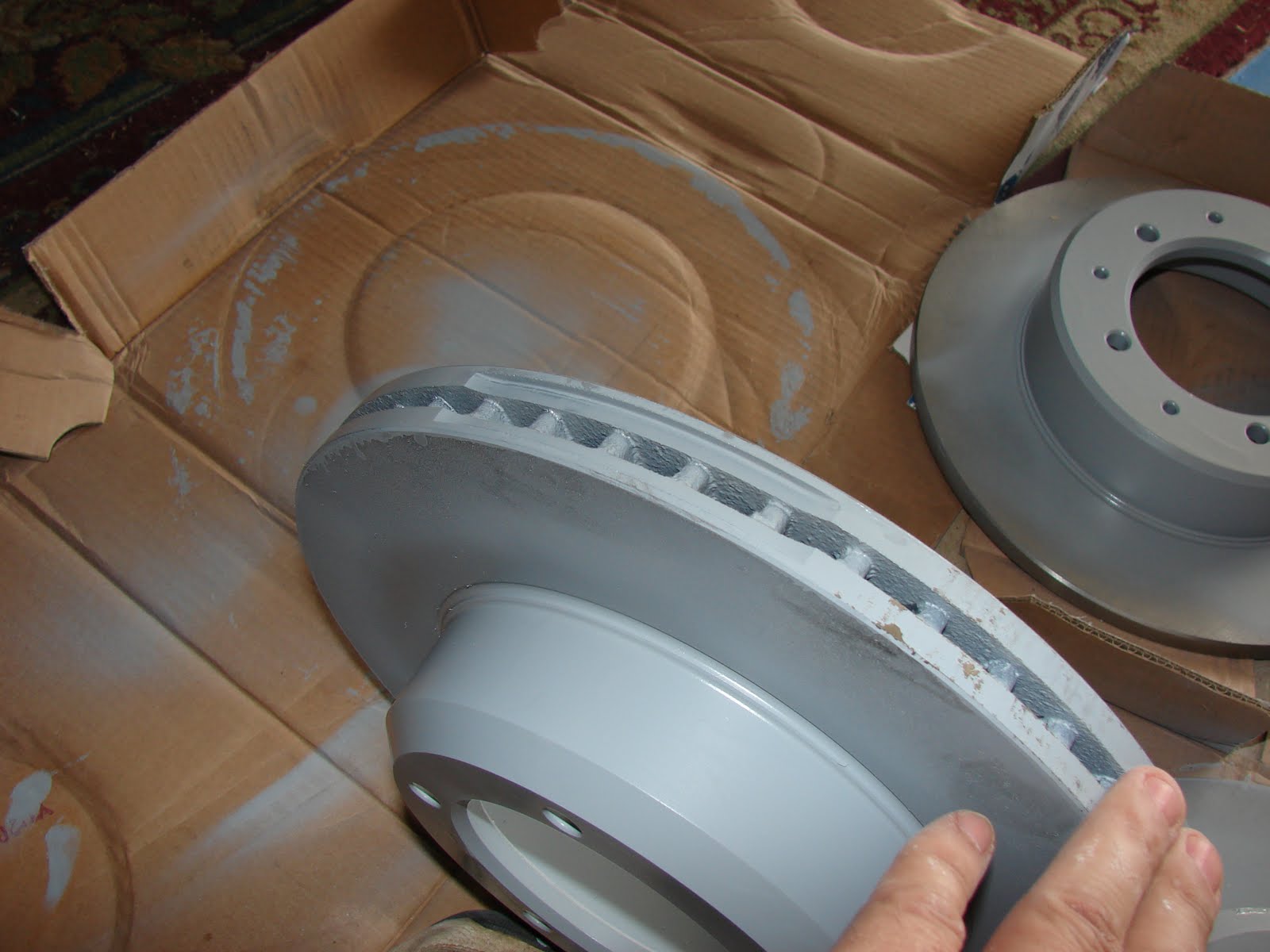
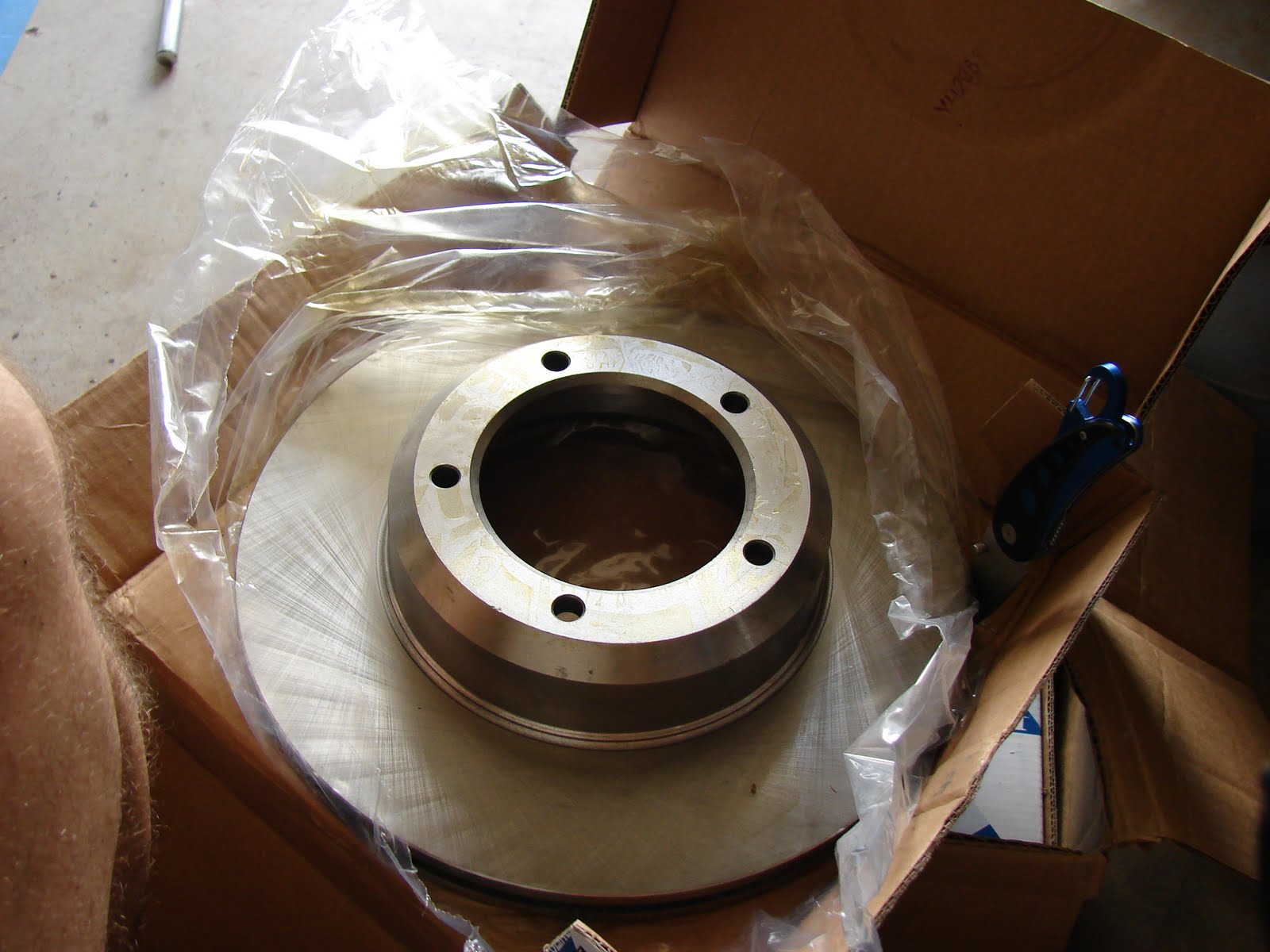
I bought a full set of discs and decided, like all the new items I put on the Rover, to limit the rust the best I can. I decided that a coat of acid etching primer would be just the thing. You might ask, “Will it work?” Who knows, but I feel better about them being painted.

So I took the new brake discs and painted them with the primer. It was not my intention to paint the actual braking surface but through my laziness efforts and impatience some healthy overspray, I got paint on the braking surface. I don’t think it matters for when the brake pads start making contact there won’t be much paint there after a few stops.

After I had put the first coat of paint on the discs I noticed an irregularity on one of the front discs.

After checking with several sources (JagGuy and The Evil German Dude) it was determined this was done to balance that disc. I had seen this before, but wanted to make sure.

Swapping the discs is a pretty straight forward job. You remove the caliper, or as EGD says the “ka-LIPer” (I wish I had an audio file of him saying that for you). This requires the brake lines on the rear brakes to be removed. So have a catch pan available or you will have a huge mess. The brake lines are “hard piped” as in not flexible at the caliper. The flexible part of the brake line on the rear axle is in the center above the axle.

After you have the caliper off, it is time to remove the axle half shaft. That can be seen in this picture.

Five bolts and you are done.

Pro Tip: I used a breaker bar to hold the wheel in place as I broke the bolts lose. I also had to use a cheater pipe to extend the leverage of the socket and ratchet. I’m getting wimpier in my advanced age.

I used a large screw driver to slip between the axle half shaft cap and the hub. Once you break the seal it comes out easily. You then flatten out the keeper ring and remove the bearing nuts. These nuts are very large and I used the biggest channel locking pliers to get them started. They were not very tight in the first place but the grease made them very hard to work with.

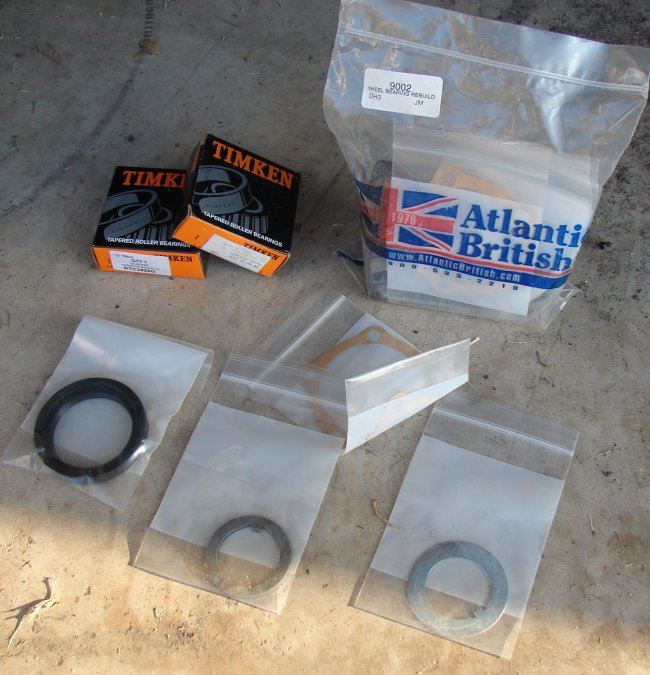
Here is another “good” for this project. It is a good idea to replace stuff as you go through the vehicle you are working on. In this example the wheel bearings are in these hubs. I remember I had bought a wheel bearing replacement kit some time ago when RovErica reported some odd behavior and noise. From what she described I thought the bearings were going out. It turned out not to be the case and I had the kits still sitting on the shelf. My axles have 185,000 miles on them. So basically if you break something down this far, go ahead and replace the serviceable parts while your there, if your budget can afford it. I will store the old bearings “for good measure” as I believe they were not bad in the first place and will work in a pinch if necessary.

After you have the hub off it is time to remove the disc from the rest of the hub. This is done by removing the crown nuts that hold the anti-lock brake sensor ring.

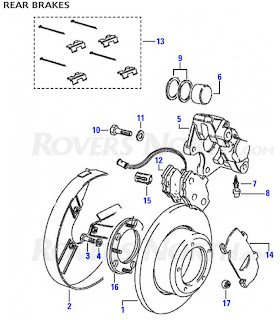
And those thread shafts pass through the disc holding the hub to the disc. They are dual threaded. Both ends are threaded and this may cause you trouble when you attempt to take the crown nuts off. Be creative. Extra points are awarded to you for removing the ring if you have to deploy additional tools or techniques. Rovers North has a good picture of the ring and assembly and how it all fits together. Click on the picture to open their site for a complete parts list.

With a little persuasion gentle tap of a hammer the hub and the disc will separate. Reassemble in reverse order. If you have a bearing kit to install you will need to do that as well. If no, definitely renew the grease on the old bearings. I will post another entry when I put the new bearings back in.

Right now I’m debating if I’m going to bother sand blasting and painting the hub unit. I really want it all to be pretty and new so maybe perhaps.

Now on to the broken axle half shaft.

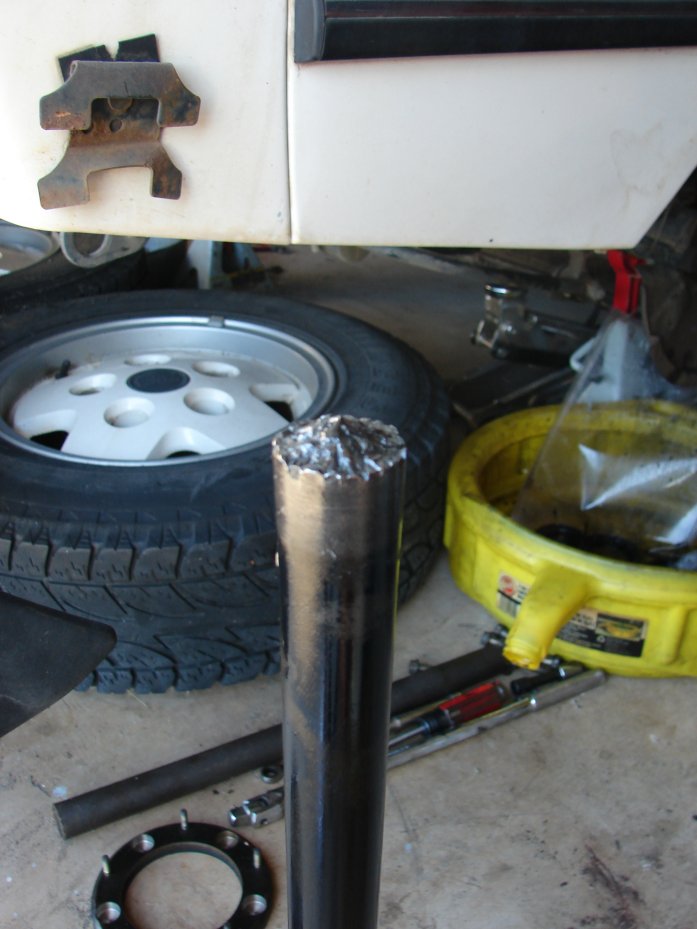
This crappy photo shows the sheared off end of my right rear axle shaft. After seeing this and an expletive laden rant a little disappointed cursing, it hit me, I will have to tear the differential apart. KNACKERS!

If we refer to the rule above, now would be a good time to put in a locking differential. But sadly the budget does not support it. What? You’ve never had the axles out of your Rover? Click here to see what a proper shaft should look like. In short, it depends on who you ask and what you are doing with your Rover.

IF we, that is you and I, were sitting in my garage having a Bodington’s the conversation might turn to 10 spline versus 24 spline axles at this point. Basically in mid-1993 Land Rover started using 24 spline axles instead of 10 spline. Are 24’s better than 10’s? There is a thread on RangeRovers.net in their forum. Check it out for wisdom on the subject.

So another phase of the project will be to assess the damage done and get the axle half shaft piece (or pieces) out of the differential. Gag.

As I posted in an earlier post, everything I touch generates two (2) more projects. At this pace I may never finish the restoration. I am trying to keep a positive outlook on everything, but Mrs. OkieRover is wondering how much this will all cost and when will it be done. As I told her, this is my “mid-life crisis motorcycle”.

I am respecting her wishes that I not buy a motorcycle. I’m hoping she realizes that this is my hobby and in her mind, is a lot safer than a motorcycle. Well, it’s a lot safer than ME BEING ON A MOTORCYCLE.

Thanks for reading and Happy Rovering.
New Links and Plasma Cutting (Post #192) 8/10/2010

I found a couple of new links for you to check out. The first and the one I am most excited about is The Last Great Road Trip. This site is great. I believe it is a model that I will be looking into for my future website redesign. It combines the posts for repairs with the trips and adventures in just the very way I would like my site to do. More on this later.

Ryan Mishler’s Regional eXploration is another great site. I haven’t spent much quality time on it yet but the pictures and content so far are great. Check it out.

Well that should suffice you until I can get the next post from my restoration formed and up on the site. Painted floor boards  FTW (for the win). I have the driver’s side done and have once again consulted the amazing JagGuy for his opinion on the floor boards on the passenger side. PLASMA CUTTER, he says. I asked if the plasma cutter would be too much for some of the sections and his classic response, “It won’t penetrate all that much. What’s under there?” My reply of, “Frame and perhaps fuel lines.” Gave him a few seconds to retort, “Ahhh it’ll be alright.”

And so with that, perhaps we’ll be cutting these at his shop as soon as I can get the rear done and make the Range Rover drivable again.

Thanks for reading and Happy Rovering.